Elk Grove, CA · Garage Door Service
New garage door installation for Herald, CA homes built around 1978. We haul the standard sizes and torsion hardware this housing stock needs, out from Elk Grove.
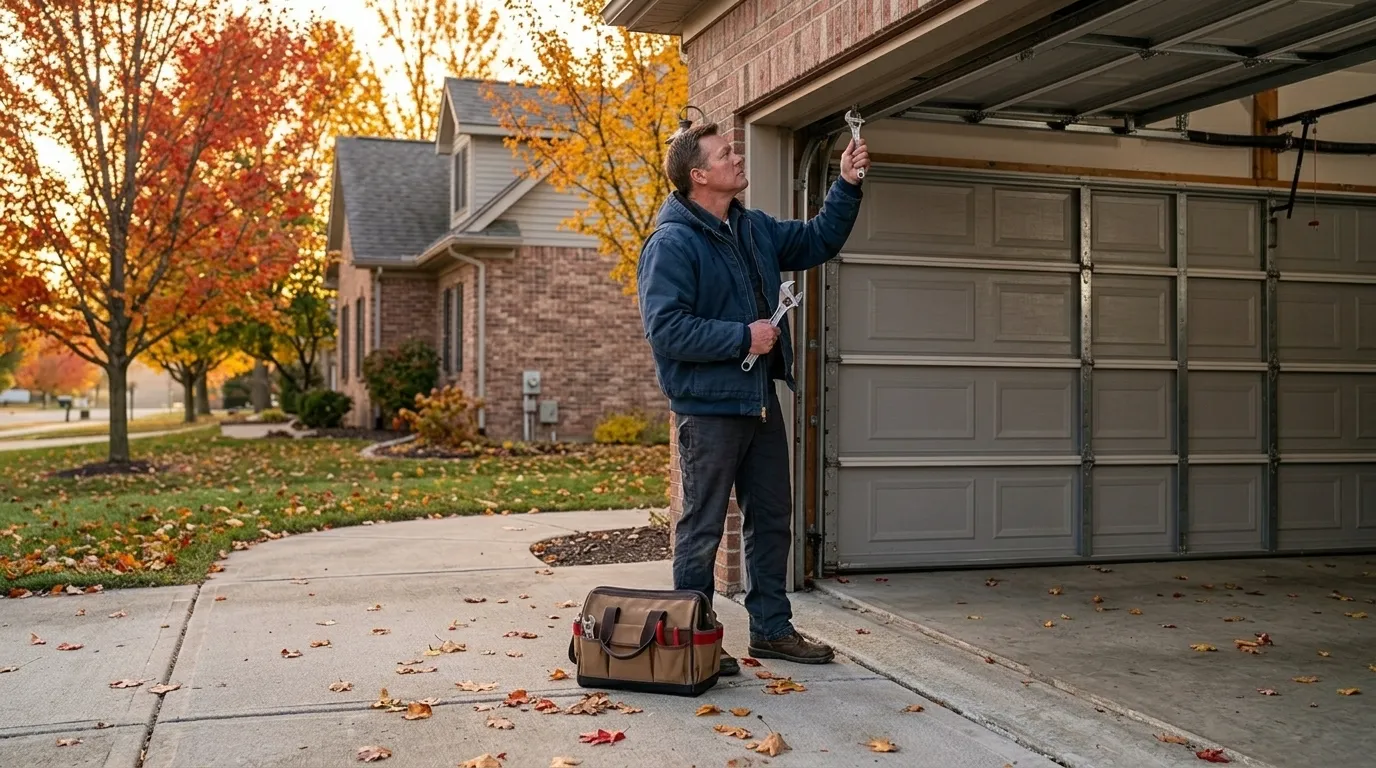
A new install in Herald almost always starts with the same problem: the door on the house doesn't match anything a supplier stocks anymore. Most of the homes out here went up around 1978, which puts them square in the mid-70s wave of construction that used non-standard opening widths and lighter-gauge track than what's sold today. We measure the rough opening, check headroom for the torsion shaft, and confirm whether the jambs are square before we ever quote a door.
Because Herald is a small pocket - 344 households total - the housing here tends to be uniform in age, which actually makes our job easier once we're on site. If one house on a street needs a new 16x7 sectional door, odds are good the neighbor's opening is close to the same dimensions. That doesn't mean we guess. Every install still gets its own measurement, but knowing the era going in means we bring the right hinges, the right end bearing plates, and springs wound for the panel weight this generation of door actually used, not what a big-box kit assumes.
The doors built during that late-1970s wave commonly ran two-inch track and torsion springs sized for thin lauan or single-layer steel panels. When a homeowner swaps in a heavier insulated door without upsizing the spring and reinforcing the track, the opener strains, the cables wear fast, and the door can drop unevenly on one side. We see this most on jobs where a door was replaced once already, years back, with parts sized for the old panel instead of the new one.
The other failure point is the header itself. Framing from this era wasn't always built with a heavier insulated door in mind, so on some installs we have to add blocking before the new jambs and track go up. Skipping that step is how a door that looks fine on install day starts racking at the corners within a year. We check it every time, and if it needs the extra lumber, we say so before we quote the job, not after.
A kit-box door looks straightforward until you're standing under a wound torsion spring with no winding bars. That part of the job isn't a place to save money - a spring under tension that slips off a cone can break a hand or worse, and it's the single most common ER-trip cause in this trade. If you're set on doing paint, weatherstripping, or hardware swaps yourself, that's fine and we'll tell you honestly which parts of a job are safe to DIY and which aren't.
Where we draw the line: full door replacement, spring sizing, and track alignment on a house with 1970s framing are not weekend projects, especially when the header needs reinforcing first. If you've already pulled the old door off and want a second opinion before you order parts, say so when you call - we'd rather look at what you've got than have you buy the wrong track twice.
We run the Herald route out of Elk Grove, about 12 miles away, so a visit here gets scheduled as part of that day's route rather than dispatched on demand. Call or use the site to describe the door - age, size, whether it's a single or double bay - and we'll give you a window for a measure-and-quote visit. If you already know it's a full replacement rather than a repair, mention that up front; it changes what we bring on the truck.
We don't keep a branch or drop-in counter in Herald itself, so everything routes through Elk Grove first. That's not a knock on the town, it's just the honest logistics of a small household count out this way - we can't justify stocking a local yard for 344 houses, but we can and do bring the full kit with us.
For a new install we carry standard sectional door sizes, torsion springs rated for both light and heavier insulated panels, galvanized track in the widths this era of construction actually needs, and both belt and chain-drive openers. What we don't carry on the truck is custom millwork - if a house needs a non-standard width because of an unusual framing job, that gets special-ordered and adds lead time before install day.
We size springs to the actual door weight at time of install, not to whatever was on the house before, since a lot of these homes have already had one mismatched swap done by a previous owner or a prior contractor.
A straightforward single-door install, once we're on site with the right parts, runs a few hours from tear-out to a working opener. Double doors, or any job where the header needs reinforcing first, run longer - sometimes into a second visit if the framing work turns up something we didn't expect from the initial measure. We'd rather add a return trip than rush a header repair on a house this age.
Because the route out to Herald adds drive time on both ends, we schedule these as full-day jobs rather than quick add-ons, which is part of why booking ahead helps more here than it would somewhere closer to the shop.
No. We run out of Elk Grove, about 12 miles away, and schedule Herald jobs as full visits from there. We don't keep a local yard here - the household count out this way (about 344) doesn't support a second branch, but we bring the full parts kit on every visit.
Often yes. Most homes here were built around 1978, so openings tend to run standard widths for that era, but we still measure every job. Older framing sometimes needs blocking added before a heavier insulated door goes in, and we check for that before quoting.
Sometimes, but be careful with springs sized for the old panel. If the new door is heavier than what's coming off, an undersized spring strains the opener and wears cables fast. We'll size the spring to the actual new door weight, not the old one.
Call now or request a free quote - same-day service on most repairs, upfront written pricing.