Elk Grove, CA · Garage Door Service
Garage door maintenance for Elk Grove homes built between 1946 and 2004, where original hardware and long dry summers wear springs, rollers, and openers faster than owners expect.
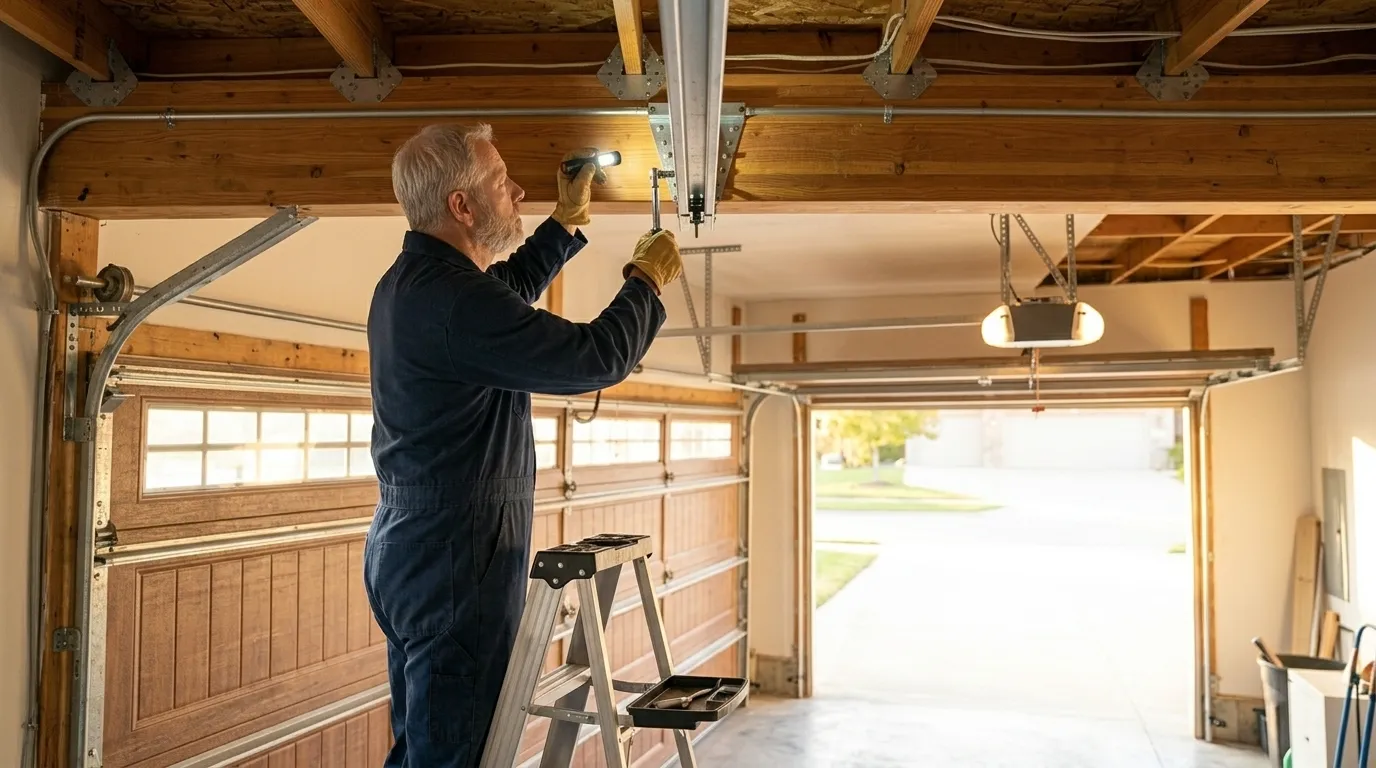
A real maintenance visit isn't a five-minute once-over. We check spring tension and balance, inspect the cables and drums for fraying or uneven wind, pull and clean the rollers, lube the hinges and track, check the opener's force settings, and tighten the lag screws and header bracket that hold the whole system to the framing. On a lot of the doors we see, that hardware is original to the house - torsion springs, top fixtures, and the track were all sized for a door built decades ago, not for whatever heavier insulated panel replaced it later. We also check the bottom seal and weatherstripping, since a gap there is usually the first sign something's shifted out of square.
We don't replace parts on a maintenance call unless something is actually failing - a spring at the end of its cycle life, a roller that's cracked through, a cable with visible strands gone. If everything's within spec, we adjust and lube it and tell you honestly what's got a season or two left, rather than swapping parts that don't need it. That's the limitation worth saying up front: maintenance extends the life of what you have, it doesn't reset the clock on hardware that's 30 or 40 years old.
Housing in the areas we cover was mostly built between 1946 and 2004, with the median right around 1977 and the bulk of it dating to the 1960s and '70s across the 26 named neighborhoods in this service area. That matters because torsion springs are rated for a number of open-close cycles, not a number of years, and a door installed in the Carter or Reagan years has usually put in more cycles than its springs were ever spec'd for - even with light use.
The other factor is heat. This area sits in a moderate-heat climate band, meaning long stretches of hot, dry weather rather than sharp freeze-thaw cycles. That's easier on a door than a lot of climates, but it still dries out lubricant on tracks and hinges faster than owners expect, and it makes nylon rollers brittle over time. Combine an older torsion spring with a dried-out track and a roller that's lost its give, and you get the binding, grinding, and uneven travel that bring most of our maintenance calls in from this stretch of Sacramento County.
The pattern is pretty consistent across the houses we service. The door starts hesitating partway up, or it opens unevenly - one side lagging the other by an inch or two. You'll hear a grinding or popping sound near the top of the track, or a rhythmic squeak on every cycle that wasn't there a year ago. Sometimes it's the opener straining audibly, working harder than it should to lift a door that's lost spring balance.
None of that means the door is about to fail today. It usually means the spring has stretched past its working tension, or the rollers have worn enough that they're no longer riding true in the track. Left alone, it gets worse gradually - louder, slower, more uneven - until either the opener burns out trying to compensate or a cable finally lets go. Caught during a maintenance visit, it's usually an adjustment and a part swap, not an emergency call.
A standard maintenance visit on a single door runs under an hour in most cases - inspection, adjustment, lubrication, and a check of the opener settings. If we find a spring or a set of rollers that need replacing, that adds time on-site but it's still a same-visit job; we're not ordering in parts for standard torsion springs or rollers. What can add time is a door with non-standard hardware or an opener model where we need to source a specific part, which is less common but does happen on older installs.
For a two-car household with two single doors, plan on a bit under two hours for both. We'll tell you at the start of the visit if we find something that changes that estimate, rather than surprising you at the end.
Once a year is reasonable for most households, especially given how much of the housing stock here dates back to the 1960s-1990s with original or aging hardware. If your door sees heavy daily use - multiple vehicles, a home business - twice a year catches wear before it turns into a stuck door or a snapped cable.
Yes, though less dramatically than freeze-thaw climates. This area sits in a moderate-heat band, and sustained heat dries out lubricant on tracks and hinges and makes older nylon rollers brittle faster than owners expect. It's one of the main reasons a yearly lube-and-adjust visit pays off here.
Not automatically, but it means the torsion spring and hardware have likely absorbed more open-close cycles than they were rated for, since springs wear by cycle count, not calendar age. A maintenance visit will tell you whether that spring still has life left or is close to the end.
We cover the wider service area, including communities like Florin, Vineyard, Franklin, and Parkway. Local detail for each of those areas is on their own pages, but the maintenance work itself is the same across the region.
Call now or request a free quote - same-day service on most repairs, upfront written pricing.