Elk Grove, CA · Garage Door Service
Herald homes date to a median build year of 1978, which means chain-drive openers from the 70s. We install modern belt and jackshaft units, traveling 12 miles from Elk Grove.
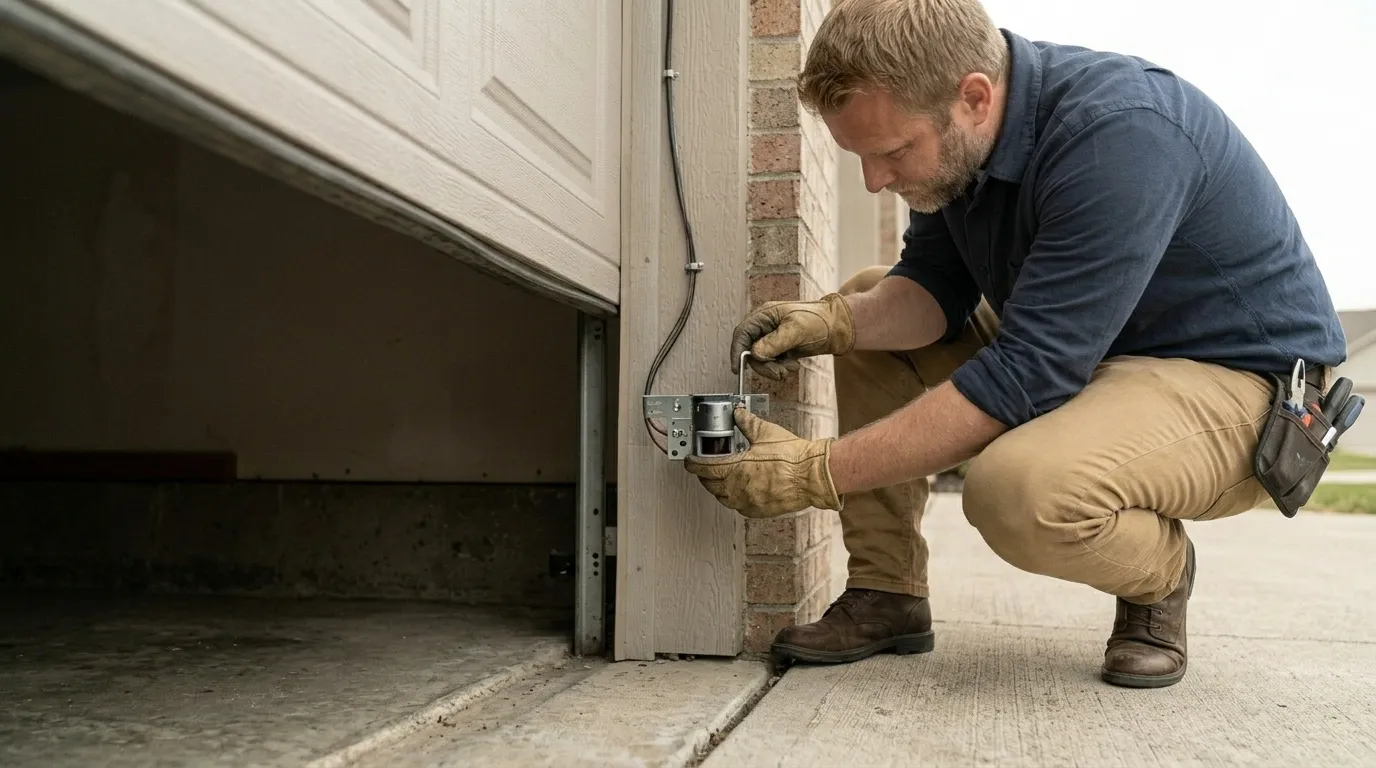
The median house in Herald went up in 1978, which puts most garages in the chain-drive era. That's a 1/3 horsepower motor bolted to a steel rail, pulling a door with no photo-eye sensors because those weren't code yet. Swapping that unit out isn't a plug-and-play job. The old bracket spacing, the header clearance, and the wiring for a wall button that predates any keypad all need to be worked around or replaced.
Installing a new opener here usually means running fresh low-voltage wire for safety sensors, mounting a new header bracket at the right height for a modern rail, and checking that the door itself - often original to the house - can still take the pull of a belt or chain drive without the top panel flexing. With only 344 households in this pocket of the service area, we're not chasing a high volume of calls out here, but the houses that do call in tend to have the same-era garage, so the fix looks similar door to door.
We bring the opener, the rail, the sensors, and the wall control on the truck. What we don't bring is a new garage door panel - if the door itself is failing, that's a separate conversation before an opener install makes sense.
A 1978 door was engineered for the weight of an opener from that decade, not a modern 3/4 horsepower unit with a battery backup and a heavier motor housing. Mount a new opener on a header that's been softened by decades of moisture and the bracket can pull loose within a year. That's the most common failure we see on installs in older housing stock like Herald's.
The other issue is wiring. Houses built before photo-eye sensors were required often have a single strand of bell wire running to a wall switch, nothing set up for the two-wire sensor loop a modern opener needs. Retrofitting that isn't hard, but skipping it means installing an opener that won't pass a basic safety check - it'll run the door down onto anything in its path without stopping.
Springs are the third thing. If the torsion spring was sized for a lighter, older-style door and someone's swapped the door for something heavier over the years, a new opener will strain against it and burn out early. We check spring tension before we hang anything on the rail.
A homeowner comfortable with a drill can hang a modern opener kit in an afternoon on a garage that's been kept up to date. Herald's stock, with a median build year of 1978, complicates that. The header bracket location, the wire gauge already in the wall, and the condition of the joist the rail bolts into all need a look before the box gets opened.
Where it gets genuinely risky is the safety sensor alignment and the spring tension check. Get the sensors misaligned and the door won't reverse when it should. Get the spring wrong and you're working against stored force that can snap a cable. If you're set on doing it yourself, at minimum have someone qualified check the spring and sensor wiring before you run the door through its first full cycle.
We work Herald from our Elk Grove base, about 12 miles out. Call ahead so we can bring the right opener and hardware for your door's age and header setup - a same-day walk-in isn't realistic at that distance, but a scheduled visit is. Check the Herald service area page for what we cover out this way, or see the opener installation page for Elk Grove for the general rundown on the units we carry.
We carry belt-drive and chain-drive openers on the truck along with the header brackets, rail extensions, and sensor kits that fit older mounting patterns like the ones common in Herald's 1978-median housing. Wall controls, remotes, and the low-voltage wire for a full sensor retrofit come standard on any install.
What we don't stock is anything door-specific - if the panel or track needs replacing alongside the opener, that's a second visit with different parts. We'd rather quote that honestly than show up short.
A straightforward swap - new opener onto an existing, sound header, with wiring already in decent shape - runs two to three hours. Add a bracket replacement or a full sensor wiring retrofit, which is common on a house from the late 1970s that's never had one, and plan on three to four.
Because we're driving the 12 miles from Elk Grove, we schedule Herald jobs rather than working them as drop-ins. That means the appointment window matters more here than it would somewhere closer to the shop - we'd rather give you an accurate arrival time than promise a rush we can't back up from that distance.
In most cases yes, but we check the door's weight and the header condition first. A door built when the median house here went up in 1978 was designed for a lighter, older-style opener, so we verify the spring tension and bracket strength before hanging a heavier modern unit on it.
No. We run out of Elk Grove and travel to Herald, about 12 miles each way. We schedule these visits ahead of time rather than offering same-day walk-ins, so a call before you need the work done helps us bring the right parts.
Usually not if the button predates safety sensor wiring, which is common on houses from Herald's era. New openers need a two-wire sensor loop that older wall switch wiring wasn't built for, so we typically run fresh wire as part of the install.
If the panel is bowed, the tracks are bent, or the spring is clearly undersized for the door's current weight, putting a new opener on top of that just moves the failure point. We'll tell you honestly if opener-only isn't the right fix.
Call now or request a free quote - same-day service on most repairs, upfront written pricing.