Elk Grove, CA · Garage Door Service
Elk Grove homes mostly date from 1946-2004, with a lot of 1960s-70s stock. Here's how to tell if your original door and hardware are worth repairing, or past it.
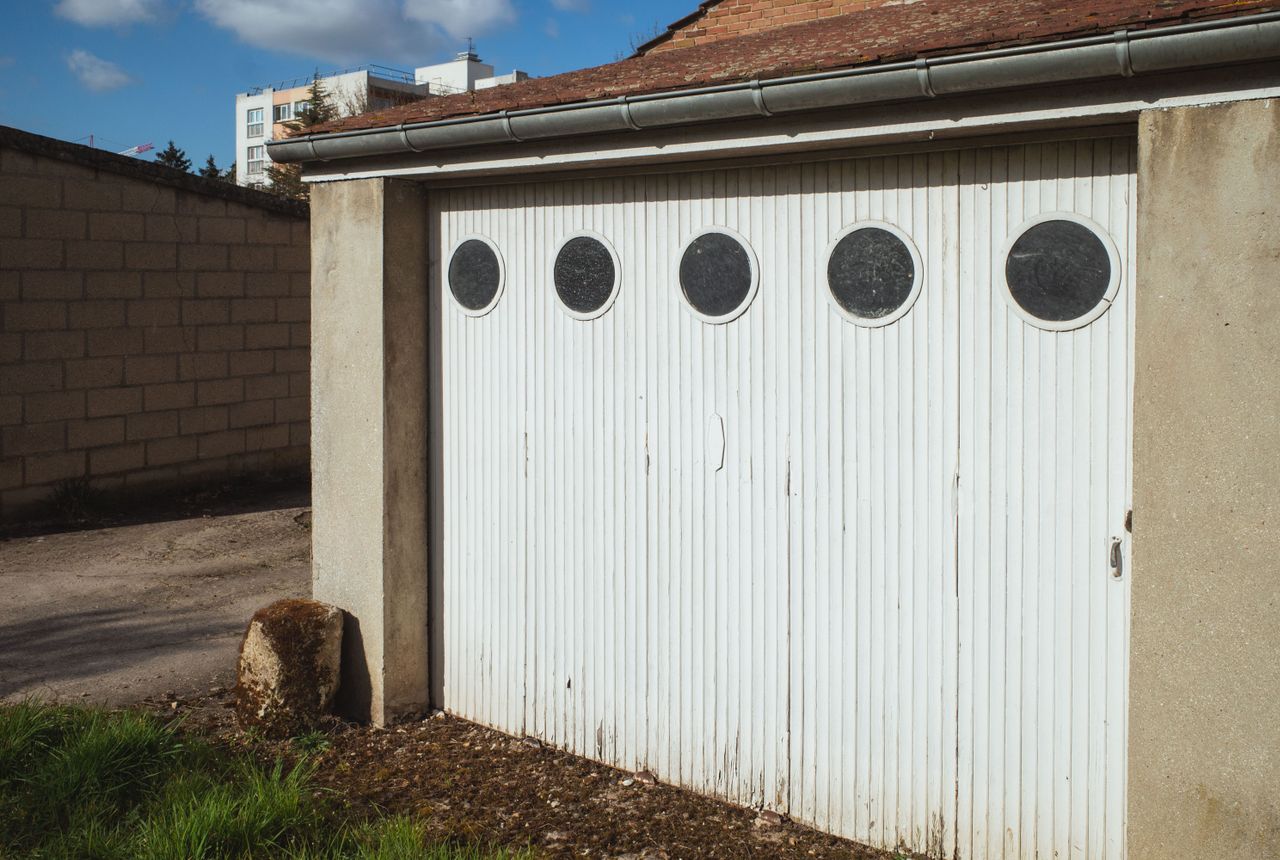
Elk Grove sits in a moderate heat climate band, not the kind of place where doors get cracked by hard freezes or torn apart by extreme swings. That matters when you're deciding whether to fix or replace, because a lot of the damage we see here isn't weather damage at all. It's age damage. Housing across this service area was mostly built between 1946 and 2004, with the heaviest concentration going up in the 1960s and 70s across the named areas we work in, including Florin, Vineyard, and Franklin. A door built in that era wasn't built for today's opener loads or today's insulation standards. It was built to match the house, and the house is now old enough that the original springs, tracks, and rollers are well past their rated cycle count. The heat here still matters at the margins: it dries out lubricant faster and it makes nylon rollers brittle sooner than they'd fail in a cooler climate. But the bigger factor is simply that this housing stock has had 20 to 60 years to wear its original hardware down. That's the lens worth using before you decide anything.
When a door from that 1960s-70s stock starts acting up, it's rarely one thing. The torsion spring loses tension gradually, so the opener starts straining to lift a door it used to handle without effort. Rollers that were steel or early nylon wear grooves into the track, which throws the whole travel path slightly off. Cables fray at the drum where they've made the same bend ten thousand times. None of this shows up as a single dramatic failure. It shows up as a door that's gotten louder, slower, or harder to lift by hand over a period of months. If your house is one of the older ones in this service area, built closer to that 1977 median year, the odds are decent that you're looking at original or close-to-original hardware. That's worth knowing going in, because it changes the math: a 45-year-old torsion spring isn't a candidate for a quick fix, it's a candidate for full replacement of the spring system, and sometimes the track and rollers with it. A newer door in this same area, built after 2000, is a different conversation entirely.
A torsion spring under tension can put someone in the hospital, and that's true whether the door is five years old or fifty. That's not a local fact, that's just physics, but it's worth saying plainly: if the job involves winding or unwinding a torsion spring, replacing cables under load, or realigning bent track, call someone. We don't sugarcoat this one. Where the local housing stock changes the calculation is in parts availability. A door original to a house built in the 1960s or 70s often uses hardware sizes and mounting patterns that aren't what's on the shelf today. We can source most of it, but it sometimes takes an extra day or two, and that's the honest limitation here: we're not always going to have the exact original-spec part on the truck for a house that old. If your opener is original to a house from that era too, the motor and the drive mechanism are usually the first things worth checking, since they've likely outlived their expected life by a decade or more.
Not everything needs a truck out the same week. Because Elk Grove sits in a moderate heat band rather than a harsh one, you don't get the same freeze-thaw cycling that snaps panels or warps wood doors in colder climates, so cosmetic wear tends to stay cosmetic longer here. A little surface rust on a hinge, a squeak that grease fixes, a slight rattle in the track that doesn't affect travel - none of that is urgent. If your door still opens and closes smoothly and the noise is new but not accompanied by binding or jerking, it's reasonable to keep an eye on it for a few weeks rather than book a same-day call. Given that median household income across this service area sits at $90,951, most homeowners here can afford to fix things properly rather than patch them, which means there's less pressure to let a small problem run until it becomes a bigger one. The one thing not worth waiting on is a spring that's visibly stretched or a cable that's frayed. Those don't get better with time.
Not automatically. If it's opening and closing evenly with no grinding or jerking, there's no reason to replace working hardware just because of its age. We'd look at spring tension and cable condition on a visit and tell you honestly whether it's near the end or has years left.
Usually yes, if the track and drum are still straight. The spring itself is a standard-size replacement in most cases. Where it gets more involved is if the mounting hardware is an older pattern that takes an extra day to source, which does happen on houses from the 1960s and 70s stock common here.
Not in the same way. This is a moderate heat band, so we don't see the freeze-related cracking or warping you'd get further north. What we see instead is straightforward wear from age, since most of the housing stock here is decades old and running on original hardware.
Call now or request a free quote - same-day service on most repairs, upfront written pricing.