Elk Grove, CA · Garage Door Service
Elk Grove Garage Door Pros travels 15 miles to Carmichael, where most houses date to the early 1970s and run torsion hardware, not newer steel doors.
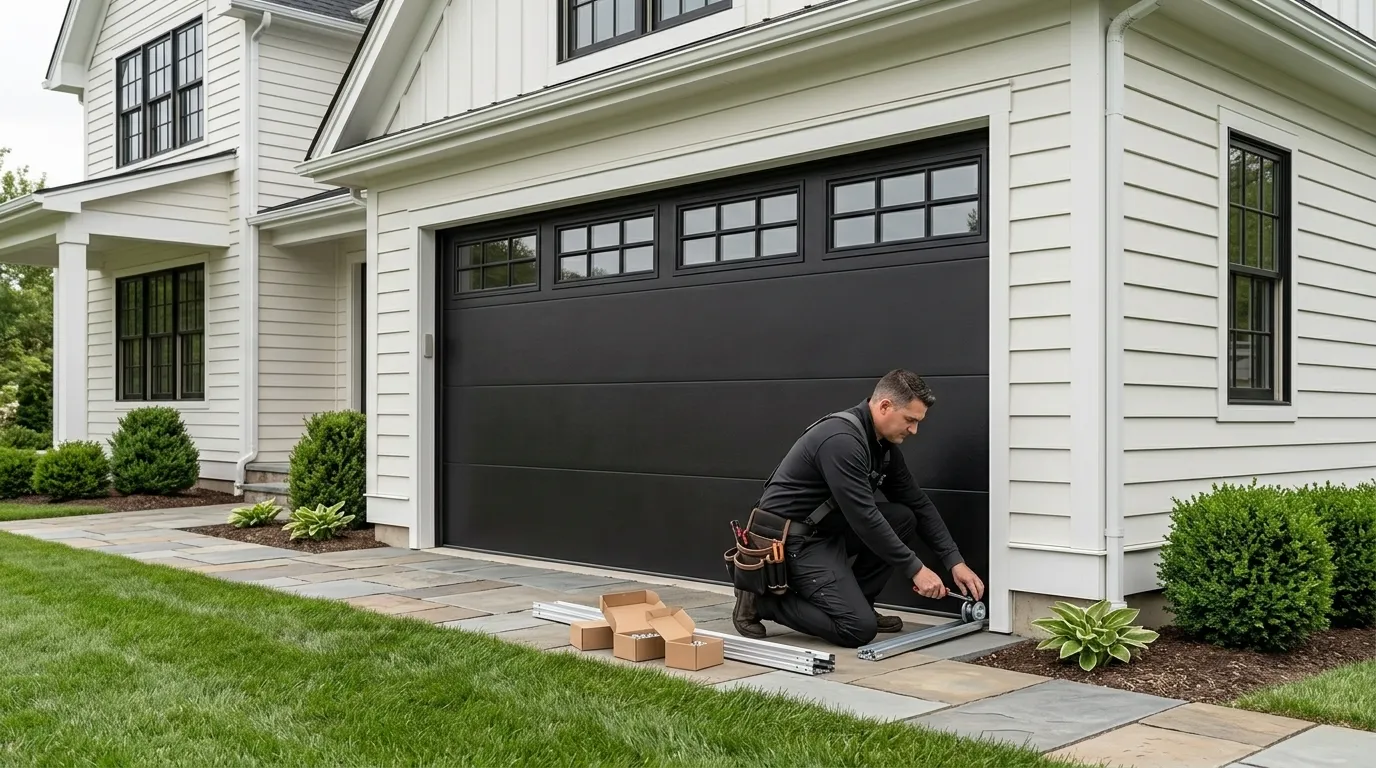
Carmichael's median house dates to 1973, which puts most garages here squarely in the torsion-spring era, well before the pre-hung steel sectional doors that show up in newer subdivisions closer to Elk Grove. That means side-mounted torsion springs on older tracks, single-layer steel or aluminum panels that have taken forty-plus summers of heat, and openers that have been swapped once or twice but still bolt to original wood jambs. The region's climate band runs moderate on heat, which is kinder to doors than a true desert zone, but decades of expansion and contraction still loosen hinges, dry out roller bearings, and pull lag screws out of jambs that have shrunk a little over the years. We see panels with hairline cracks along the bottom section where water sat after winter rain and then baked dry come summer. None of this is dramatic, but it's steady wear, and it means the fix on a Carmichael call is often hardware and alignment rather than a dead opener board. If your door came with the house, there's a decent chance it's original, and parts for that generation aren't always sitting on a shelf - sometimes we're ordering a specific roller size or a spring with a wind count nobody stocks locally.
Carmichael runs about 31,477 households, and the housing stock leans heavily toward that 1973 median - solidly inside the wider 1946 to 2004 build window across the region, where most of the older tracts went up through the 1960s and '70s. Median household income here sits at $84,376, a bit below the $90,951 median across our full service area of 208,341 households and 82,965 owner-occupied homes. That gap shows up in the kind of calls we get: more requests to repair a spring or realign a track, fewer requests to gut and replace a door outright. It's not that the doors are worse here, it's that more owners are choosing to keep what they have running rather than swap it. Carmichael sits roughly 15 miles out from our Elk Grove base, putting it well past closer stops like Florin, Vineyard, or Franklin, each about 5 miles out, and past Parkway at 7. That distance doesn't change what we can fix, but it does shape how we schedule the day - Carmichael jobs tend to get grouped with other far-side calls rather than squeezed in between.
We don't keep a shop or a truck stationed in Carmichael - every job starts with a 15-mile drive out from Elk Grove, and we're honest about what that means for timing. We're not going to promise a same-hour arrival the way a company parked five minutes away might. What we do instead is build Carmichael into the day's route with other far-side stops, so the drive isn't wasted on a single call. If your spring snaps on a Tuesday morning, tell us that when you call - a broken torsion spring on a double door is a job we want to see the same day if the schedule allows it, but a bent track on a door that still opens can usually wait for a slot later that week without the door getting worse. One honest limit: if a part isn't something we carry on the truck - certain older spring wind counts or a discontinued panel style - we may need to order it before the second visit, and that lead time is out of our hands. We'll tell you up front if that's the situation rather than guess at a date.
Given how much of Carmichael's housing sits around that 1973 build year, the calls tend to cluster around a handful of things. Torsion springs that have finally given out after decades of cycles top the list - you'll hear it as a loud bang and then the door won't budge or won't stay up. Rollers are next: original steel rollers on 50-year-old track get loud and start binding, especially on doors that get used daily. We also get a fair number of calls about openers that are the second or third one installed on the same door - the original chain-drive unit died years ago, got replaced, and now that replacement is aging out too, sometimes with worn gears or a logic board that's stopped talking to the remote. Panel damage shows up less from storms and more from routine wear - a trailer hitch, a bike rack, a bumper tap that dents the bottom section over time. What we don't see as much here is total structural failure of the door itself; most of these doors were built solid enough that with a spring, a set of rollers, and an alignment, they've got years left in them.
No. We work out of Elk Grove and drive about 15 miles to reach Carmichael. That doesn't limit what we can repair, but it does mean we schedule Carmichael calls alongside other far-side stops rather than treat it as a five-minute add-on.
Not usually. With a median build year around 1973, most Carmichael doors are running original or first-replacement hardware. Springs, rollers, and track wear are all fixable. Where we sometimes hit a wall is finding a discontinued panel style, and in that case replacement can end up cheaper than chasing an exact match.
On a house from the early '70s, that's almost always a torsion spring reaching the end of its life, or original steel rollers that have worn out their bearings. Both are common on doors this age and both are repairable without replacing the whole door.
Often yes, but not always same-day. Some spring wind counts and panel styles from that era aren't kept in stock and need to be ordered, which adds time between the first visit and the fix. We'll tell you up front if your job falls into that category.
Call now or request a free quote - same-day service on most repairs, upfront written pricing.