Elk Grove, CA · Garage Door Service
Serving Rosemont's 1970s-era garages, 9 miles from our Elk Grove shop. Torsion spring swaps, opener repair, and panel work built around what's actually on these doors.
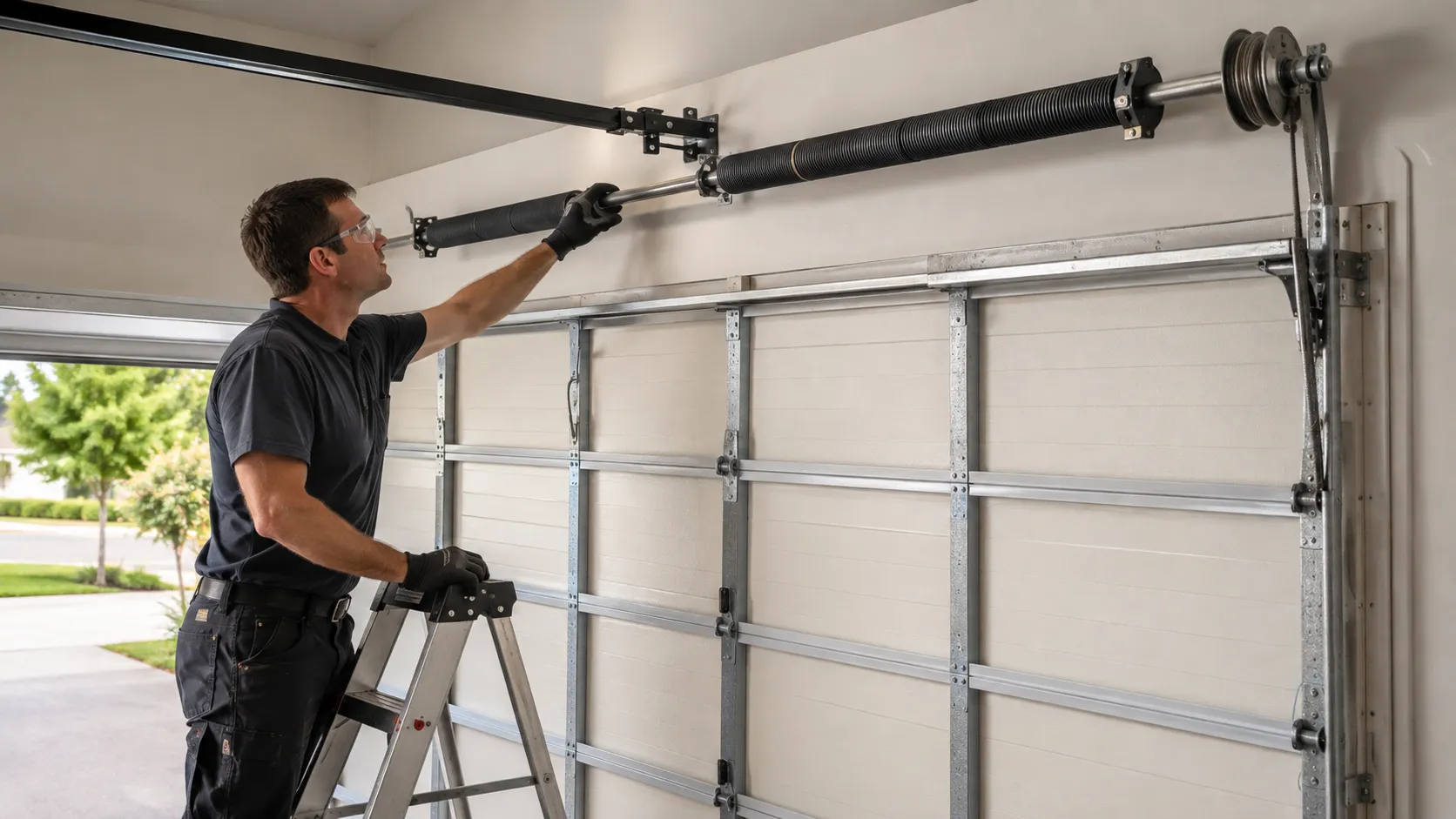
Rosemont's houses have a median build year of 1976, which puts most garages here squarely in the torsion-spring era rather than the older extension-spring setups you'll find in neighborhoods built before the 1960s. That matters because a 1976 door is old enough that its original springs, if they're still in there, are past due for failure, but the hardware is common enough that we're not hunting down obsolete parts. What we see more often is a door that's had one replacement already - a newer steel panel bolted onto an original track and jamb that never got squared up. The mismatch shows as a door that binds on one side, or an opener that strains because the door itself is heavier than the motor was ever set up for. If your garage still has the built-in light switch wiring from the original construction, that's usually a sign nothing structural has been touched since 1976, which changes what we check first when we get there.
Across this side of the service area, most housing went up in the 1960s and 70s, and Rosemont's own median year of 1976 sits right in that stretch. That means single and two-car garages with steel sectional doors, roller hardware sized for lighter panels, and openers that have usually been swapped out once or twice since the house was built - the doors and tracks are original far more often than the motor units. With 8,729 households in the area, there's a real range: some blocks were built out fast in a couple of years and share almost identical door widths and spring counts, while others got infill over a longer stretch and mix door ages more than you'd expect. At a median household income of $86,178, we also see more owners doing partial fixes - a new opener without touching worn rollers, or a repainted door on the same shot springs - which we can usually work with rather than insist on a full teardown.
We run out of Elk Grove, about 9 miles from Rosemont, so we're not sitting in the neighborhood waiting for calls - we schedule the drive in with the rest of the day's route. That's worth knowing if you're dealing with a door stuck open overnight: we'll be honest about when we can actually get there rather than promise something we can't back up from that distance. What we can tell you is that a 9-mile run doesn't change the job once we're on-site; it's the same truck, same stock of springs and rollers, same diagnosis whether we're five minutes or twenty-five minutes out. If a part isn't something we carry on the truck - a specific opener logic board, for instance - that can add a day regardless of how close you are, and we'd rather say that up front than have you wait on us.
The most common call from this area is a torsion spring that's let go on a door old enough to have never had one replaced - consistent with a median build year of 1976, that's roughly fifty years on the original coil in a lot of cases. Second most common is rollers that have worn enough to jump the track, especially on doors that get used multiple times a day. Sacramento-area summers run a moderate heat load rather than extreme, so we're not seeing the kind of metal expansion failures you'd get in a harsher climate zone, but heat still dries out roller bearings and nylon guides faster than owners expect. Openers are the other steady call - not because the motors fail outright, but because the safety sensors get knocked out of alignment during yard work or a car bumper clipping the bracket, and the door won't close until that's fixed. We'll walk you through what we find before doing anything, and if a repair doesn't make sense against the cost of replacement, we'll say so.
No, we run out of Elk Grove, about 9 miles away, and travel out to Rosemont as part of our route. We don't keep a depot or staff stationed in the area, so we schedule the drive rather than promise an on-demand response time.
Often the track and frame are original, since the median build year here is 1976, but the door panel or opener has frequently been swapped once already. It's common to find a newer steel door bolted onto older, unsquared hardware, which causes binding.
Torsion springs fail from age and cycle count, not from a single event. On a house built around 1976, an original spring has likely done decades of lifts without replacement, and there's rarely a warning before it lets go.
It's not extreme heat by climate standards, but it still dries out roller bearings and nylon guides faster than a cooler climate would. That shows up as noisy rollers and doors that stick before it turns into an outright failure.
Call now or request a free quote - same-day service on most repairs, upfront written pricing.